Research Team
Elisa Cazzato
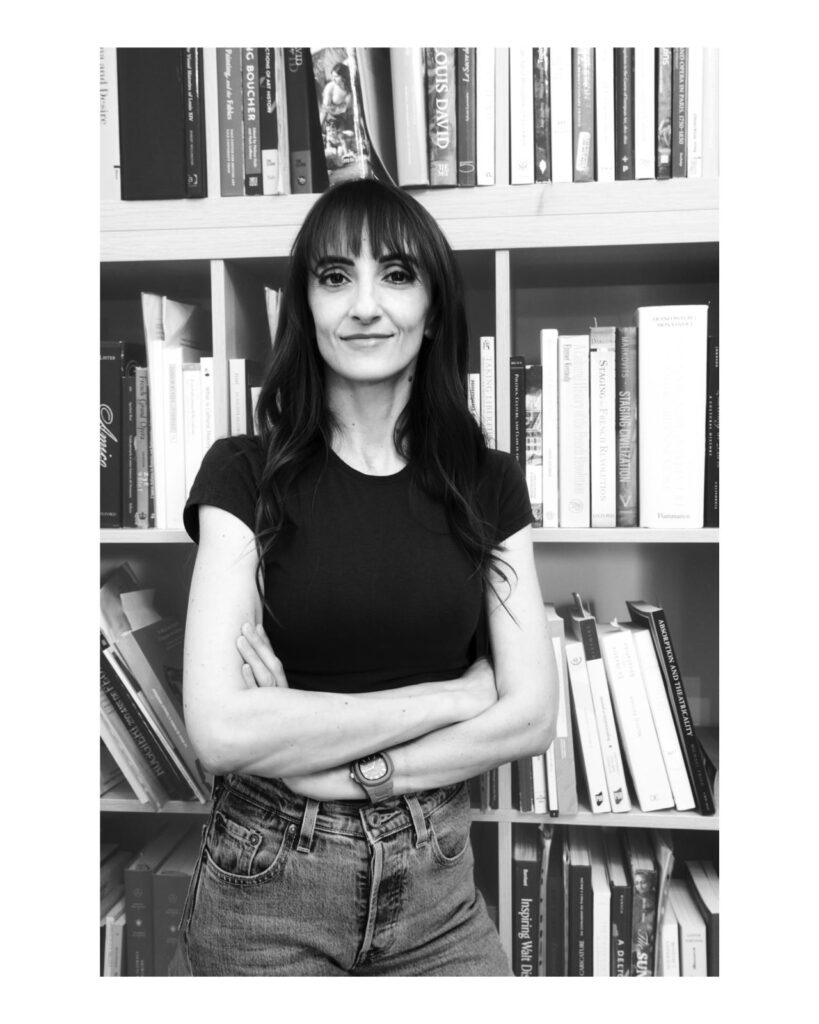
Elisa Cazzato is research fellow (RTDa) in Art History at the University of Naples Federico II, where she holds the Young Researchers 2024 grant with the project EPHEMER-ART: Tracing Artists and Practices of Ephemeral Art from Italy to Europe (1700-1880).
After receiving her MA in Art History and Criticism at the University of Milan under the supervision of Professor Fernando Mazzocca and with a thesis on the relationship between art and stage design, she moved to Australia. In 2018, she completed her PhD in Art History at The University of Sydney, fully funded by The University of Sydney International Fellowship, with a dissertation on the life and career of the stage designer Ignazio Degotti (1758-1824), supervised by Professor Mark Ledbury. In the same year, she was awarded a residential fellowship at the Fondazione Giorgio Cini in Venice (Centro Vittore Branca).
From 2020 to 2023, she was a Marie Skłodowska-Curie Global Fellow at Ca’ Foscari University of Venice, where she developed the interdisciplinary project SPECTACLE in collaboration with the CELLF (Centre d’étude de la langue et des littératures françaises) of the Sorbonne Université and the Department of Art History and the Institute of Fine Arts at the New York University. During this period, she collaborated with Professor Meredith Martin on Le Ballet des Porcelaines, a performative reimagining that intertwines art-historical research on porcelain and eighteenth-century material culture with a reflection on racial stereotypes and representations of Asian otherness. Premiered at the Metropolitan Museum of Art in New York as part of the exhibition Inspiring Walt Disney: The Animation of French Decorative Arts, the project toured in the United States and Europe, including The University of Chicago, Princeton University, the Museo e Real Bosco di Capodimonte, Palazzo Grassi, and the Massachusetts Institute of Technology.
In 2023, she organised the international conference Here Today, Gone Tomorrow? Ephemerality and Materiality in France in the Long Eighteenth Century and curated a podcast series in collaboration with Radio Ca’ Foscari.
Her work has appeared in Studi Francesi, Dance Research, Humanities Research Journal, RIEF, and Status Quaestionis, for which she also guest-edited a special issue. Her first book, Italian art, spectacle and politics at the Paris Opera. Ignazio Degotti, 1758-1824 is dedicated to the relationship between stage design, art, and politics in France between the Revolution and the Napoleonic era, is published for the series Oxford University Studies in the Enlightenment (Voltaire Foundation, Liverpool University Press).
She is a member of several international scholarly societies, including the HECAA (Historians of Eighteenth-Century Art and Architecture), where she serves (2025-2028) on the DEIA (Diversity, Equity, Inclusion and Accessibility) committee, a working group committed to promoting inclusive practices and advancing diversity in art-historical research.
Andrea Fiore
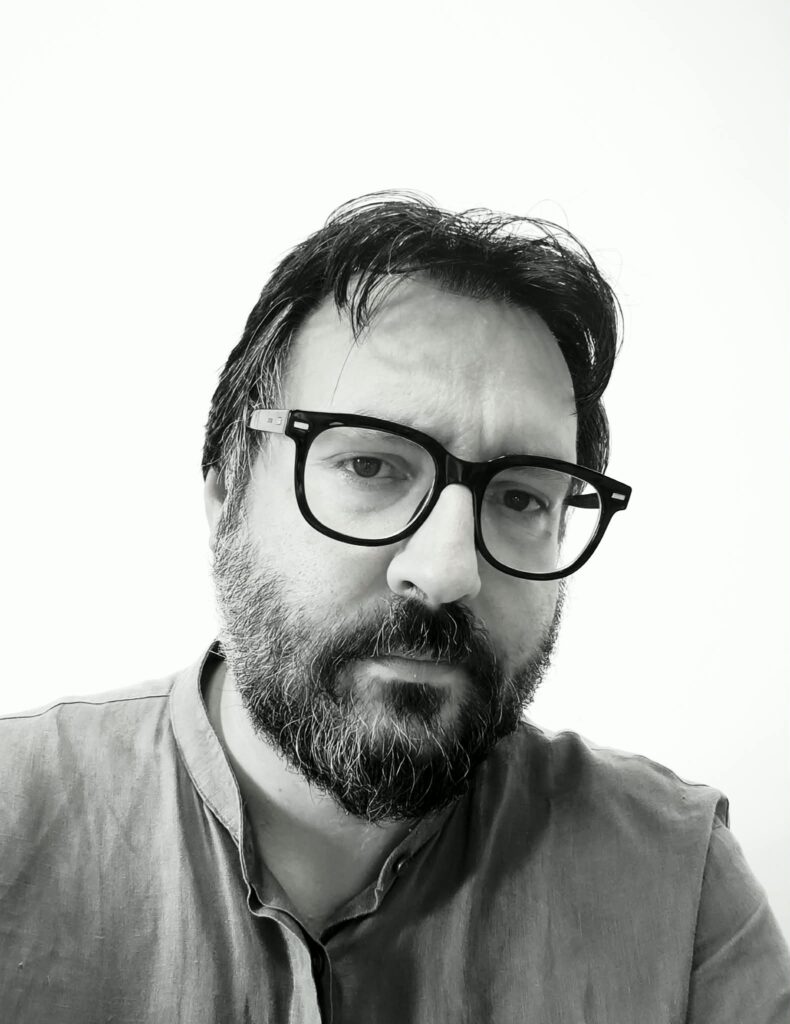
Andrea Fiore (Galatina, 1982) is a research fellow in Early Modern Art History at the Università degli Studi di Napoli Federico II, where he collaborates on the project EPHEMER-ART: Tracing Artists and Practices of Ephemeral Art from Italy to Europe (1700–1880).
He holds a Master’s degree in History and Criticism of Art (LM-89) from the Università degli Studi di Milano, where he wrote a thesis on Venetian figurative culture in Monopoli during the Renaissance under the supervision of Prof. Giovanni Agosti. In 2018 he was awarded a PhD in Cultural Heritage Studies by the Università del Salento, with a thesis on the presence and dissemination of Venetian painting in Puglia between the fifteenth and sixteenth centuries, supervised by Prof. Marco Tanzi. From 2018 to 2021 he served as Honorary Inspector for the Italian Ministry of Cultural Heritage and Activities, with responsibility for the pictorial heritage of the provinces of Lecce, Brindisi and Taranto.
In 2019 he was a fellow of the Fondazione Ermitage, with a research project entitled I Primitivi veneti nelle collezioni del Museo dell’Ermitage: esperienze figurative adriatiche tra il XIV e il XV secolo.
His art-historical research has focused primarily on the circulation of Venetian figurative culture and its impact on the territories of the southern Adriatic, with particular attention to the mobility of artists, works and models. His publications in this field include “La circolazione della cultura figurativa veneta nel basso Adriatico”, “La fortuna dei Vivarini in Terra d’Otranto”, “Problemi di tardogotico veneziano” and “Intorno a due opere del Pordenone in Puglia”.
Alongside this, he has investigated the dispersal of artistic heritage and the history of collecting in an international context, with particular reference to relations between Italy and Russia. His contributions include “Un fiorentino alla ‘porta occidentale d’Italia’: la Visione di San Bernardo di Raffaele de’ Rossi da Finalborgo a Mosca” and “Gli esordi liguri di Raffaele de’ Rossi: un forestiero nel Burgus Finarii”.
He has also gained specific experience in policies for the protection and enhancement of cultural heritage, working as an art historian for the Soprintendenze of Turin (SABAP-TO), of Alessandria, Cuneo and Asti (SABAP-AL), and of the Metropolitan City of Bari (SABAP-BA). For the Department of Culture of the Regione Puglia he contributed to work on the Carta dei beni culturali della Puglia (CartApulia), on cataloguing systems and on museum standards. He has also collaborated with the International Council of Museums (ICOM) as representative for museum networks and territorial systems in Puglia.
He has taken part in specialist conferences, including Lorenzo Lotto: contesti, significati, conservazione, Arte, cultura e politica in movimento: la Serenissima, l’Abruzzo e le regioni adriatiche del Regno di Napoli (XVI–XVIII) and Settecento oggi. Studi e ricerche in corso. He has also contributed to exhibition projects such as Paris Bordon (1500–1571). Pittore divino and Rinascimento visto da Sud. Matera, l’Italia meridionale e il Mediterraneo tra il ‘400 e il ‘500.
He has published in scholarly and specialist journals, including Prospettiva, Nuovi Studi, Venezia Arti, Ricerche di Storia dell’Arte and Ricche Minere. He has also carried out editorial work for journals devoted to contemporary art and culture, including Alfabeta2 and Segno, and has edited a monographic issue of Ricerche di Storia dell’Arte on questions of painting and figurative culture in the Terra d’Otranto. He is a member of the Renaissance Society of America and of the Società Italiana per lo Studio del XVIII Secolo.